
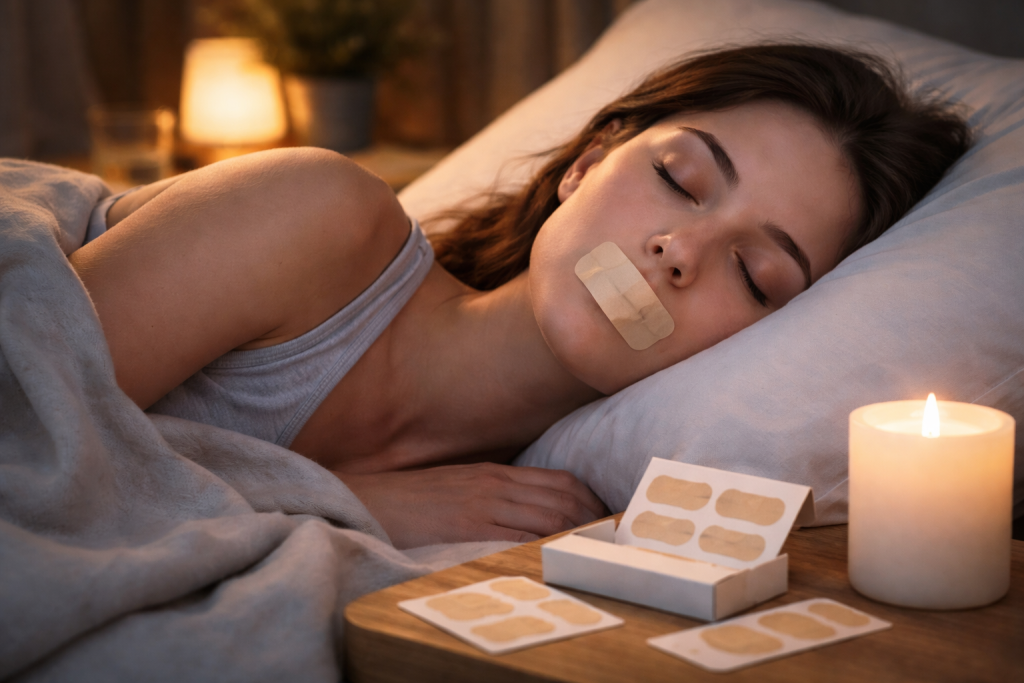
Okay so when I first came across mouth taping I genuinely thought it was one of those weird wellness trends that makes no sense when you think about it for more than five seconds. Taping your mouth shut while you sleep? Sounds bizarre. Maybe even a little scary. But after doing a deep dive into the research — and yes, eventually trying it myself — I completely changed my tune about mouth tapes for sleeping.
But I kept seeing people talk about it, people who seemed pretty normal and not at all like they were into questionable health fads, and eventually I got curious enough to actually look into it properly.
Turns out there’s a pretty solid reason why so many people are doing this.
The Whole Nose vs Mouth Thing
So here’s something that kind of blew my mind a little. Your nose is genuinely built for breathing in a way your mouth just isn’t. Like it actually warms the air up, filters out dust and bacteria, adds moisture to it before it hits your lungs, and produces this molecule called nitric oxide that helps your body take in oxygen properly.
Your mouth does literally none of that. It’s there as a backup when your nose can’t keep up, not as your main breathing route.
So when you spend eight hours every night breathing through your mouth, your body is basically working in a way it was never designed to. Your throat dries out completely. The tissue at the back of your throat starts vibrating because the air is rushing through differently, which is what actually causes snoring. You wake up with horrible breath, a dry scratchy throat, and that groggy feeling that doesn’t go away even after coffee.
And apparently doing this long term can mess with your teeth and gums too because saliva is what keeps your mouth healthy overnight and mouth breathing just dries all of that up.
What People Are Actually Experiencing
The stuff people report after switching to nasal breathing with mouth tape is pretty consistent. Snoring goes down, sometimes a lot and sometimes from the first night. Morning dry mouth disappears. Breath is fresher. Sleep feels more solid, less patchy, less of that thing where you keep half-waking up without really knowing why.
Some people say they just feel sharper during the day. More awake without needing as much caffeine. That probably comes down to getting better quality oxygen overnight rather than just technically sleeping for eight hours.
Honest disclaimer though, most of this is people sharing their own experiences. Big proper clinical studies on mouth taping specifically are still pretty rare. The science around nasal breathing in general is solid and well established, but mouth tape for snoring as a product hasn’t been studied in massive depth yet. Make of that what you will.
Please Read This Part Before Trying It
If you have sleep apnea this is not something to mess around with. During an episode your airway blocks up, and if your mouth is taped shut you’ve just taken away the one other way air could get in. That’s genuinely dangerous. If you snore really loudly, wake up gasping for air, or feel exhausted no matter how long you sleep, please see a doctor before trying anything like this.
Also if your nose is stuffed up, even just from hay fever or a cold, don’t bother. You need to actually be able to breathe through your nose freely or the whole thing becomes uncomfortable and pointless.
Same goes if enclosed spaces or anything around your face makes you feel anxious. There are other ways to work on your breathing and this particular method might just not be the right fit.
How to Give It a Proper Go
Get tape that was actually made for this. Not the stuff from a hardware store, not regular medical tape. Something hypoallergenic and designed specifically for skin around your mouth because you’re going to be wearing it every night and cheap tape will just irritate you.
Before you stick anything on, close your mouth and breathe through your nose for about a minute. If that feels totally fine you’re ready. If your nose is even a bit blocked, wait until another night.
Wash your face first and skip the lip balm or moisturiser right around your mouth. Oils will stop it sticking properly. Then put the strip either across your lips or down the middle vertically, whatever feels less weird to you. You’re not trying to seal your mouth shut like an envelope. Just enough to gently keep it closed while you sleep.
Morning removal, go slow. A bit of warm water on the strip first makes it come off without any drama.
First night will feel strange. Second night less so. By the third or fourth night most people stop thinking about it at all.
Conclusion
It’s a small thing. Genuinely one of the lowest effort changes you can make to how you sleep. No devices, no subscriptions to anything complicated, no learning curve. Just a strip of tape and your body doing what it actually prefers to do when it gets the chance.
Frequently Asked Questions
- Can mouth taping stop snoring completely? It reduces snoring from mouth breathing, but won’t fix snoring caused by sleep apnea or nasal issues.
- Is it dangerous to tape your mouth shut while sleeping? Safe for healthy adults with a clear nose and no sleep apnea — risky if either of those apply.
- What if I wake up and the tape has come off? Totally normal at first; your body opened your mouth out of habit — keep trying and it usually stops.
- How long does it take to see results? Dry mouth improves the first night; snoring reduces within a week; deeper sleep benefits show in 2–4 weeks.
- Can I use mouth tape if I have a beard or moustache? Yes — try vertical placement or a stronger-hold tape for better adhesion over facial hair.
- Is mouth tape the same as a chin strap? No — a chin strap holds your jaw from outside, while tape seals directly over the lips; most people find tape more comfortable.